
MAIRON implements an industrial photovoltaic system in the Găeşti factory: 1 GWh of solar energy produced through a technical solution offered by 4ENVIGO
MAIRON’s adoption of an industrial photovoltaic system for its Găeşti factory, in partnership with 4ENVIGO, marks a significant step in the adoption of renewable energy in the Romanian metallurgical industry. This initiative highlights the efficient use of solar energy in steel and aluminum production, known for its energy-intensive, constant high-temperature production processes, as well as its high carbon footprint.
European metallurgical industry
The European metallurgical industry is responsible for around 8% of the EU’s total CO₂ emissions, with the majority of the contribution coming from steel and aluminium production, which require energy-intensive processes, largely based on fossil fuels. With around 250 million tonnes of CO₂/year, steel production accounts for around 6% of the EU’s total greenhouse gas emissions. The metallurgical industry is therefore a central target of European climate policies, and the transition to low-emission metallurgy is essential to achieve decarbonisation objectives.
Among the objectives of the “Fit for 55” package, the EU requires a drastic reduction in carbon emissions by 2030 and climate neutrality by 2050, both by reducing carbon emissions in the metallurgical industry by at least 30–50% by 2030 and by increasing the share of electricity from renewable sources. Under pressure from European regulations, customers, investors and authorities demand sustainable products with clear traceability and low carbon emissions. Thus, all European companies must integrate sustainability throughout the value chain to remain competitive.
Recent energy crises have led to volatility and significant increases in electricity costs, as metallurgical processes are energy-intensive, requiring constant, extremely high temperatures in production flows. The challenges related to costs, regulations and energy transition are huge, but can become opportunities for players who adapt quickly to the new economic context.
Romania has a small but strategic share in the European metallurgical industry. Although the contribution to GDP is about 2%, local metallurgical producers have a strategic role in key industries such as construction, automotive, energy and infrastructure.
The challenge for MAIRON
Founded in 1994, MAIRON Galați offers the widest range of metallurgical products in Romania. The company owns an industrial area of 443,000 m², of which over 120,000 m² consist of halls dedicated to the production, processing, and storage of metallurgical products. With a turnover of 2.2 billion RON and over 400 employees, MAIRON distributes metallurgical products through its seven logistics centers located in Galați, Bucharest, Cluj-Napoca, Craiova, Găești, Iași, and Jebel-Timiș, serving both the domestic market and exports, mainly to European countries such as Austria, Denmark, the Netherlands, Norway, France, Germany, Italy, and Greece.
The European Union Emissions Trading System (EU ETS) requires industrial companies to pay for the right to emit CO₂, which significantly increases production costs. At the same time, the Carbon Border Adjustment Mechanism (CBAM) imposes import taxes based on the carbon footprint of products, in order to prevent “carbon leakage”.
In response to these challenges, MAIRON has launched a series of initiatives aimed at transitioning to green energy sources to secure its energy supply for the technological processes involved in metallurgical product processing. Thus, in the second half of 2024, the company began the process of selecting a specialized provider of industrial photovoltaic systems to design and implement a customized renewable energy transition solution for several production halls at its Găești site. In Găești, the MAIRON Group operates a construction welded pipe factory and processing centers where sheet metal from coils is cut and reinforcing steel is shaped.
Project description
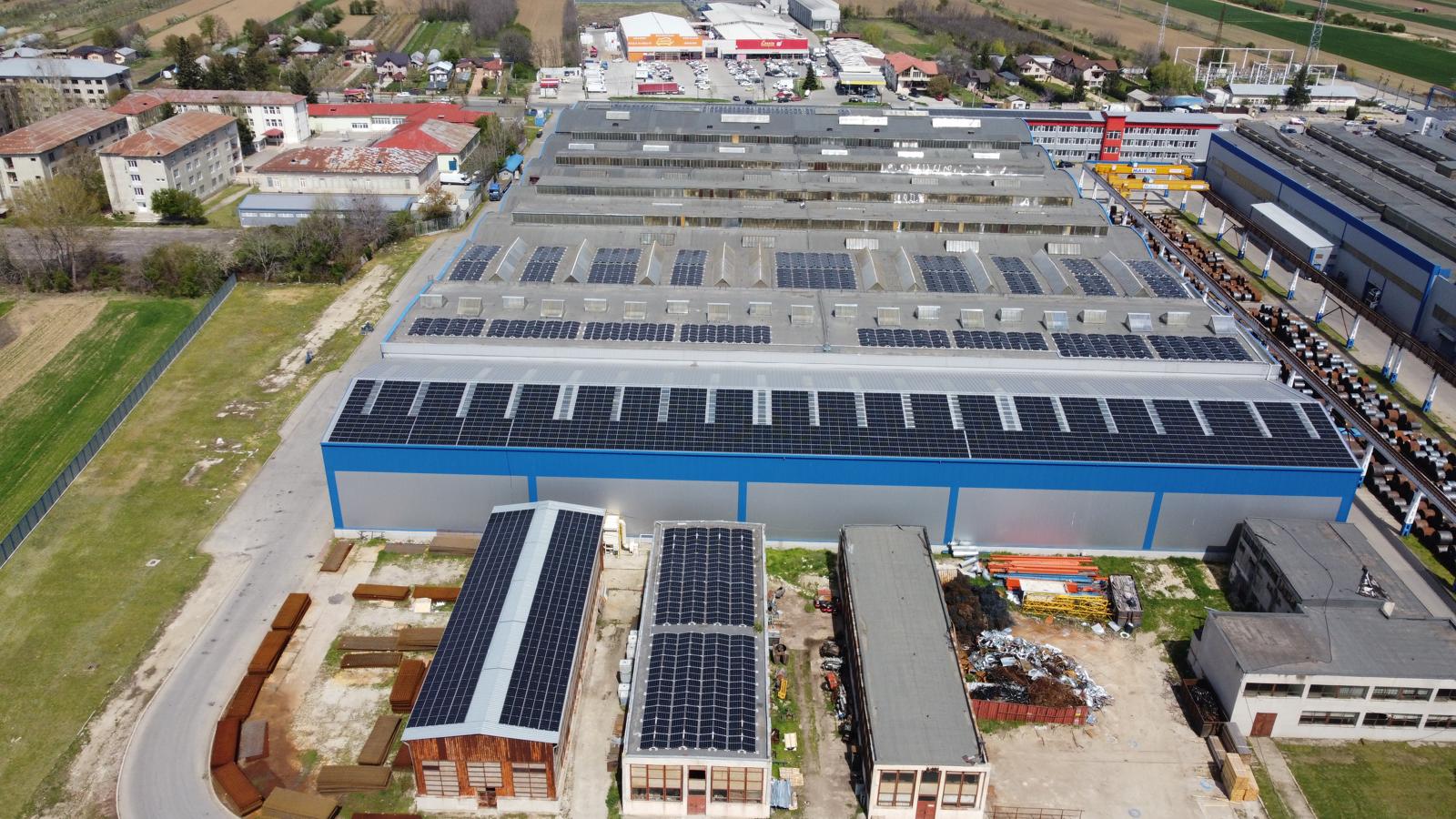
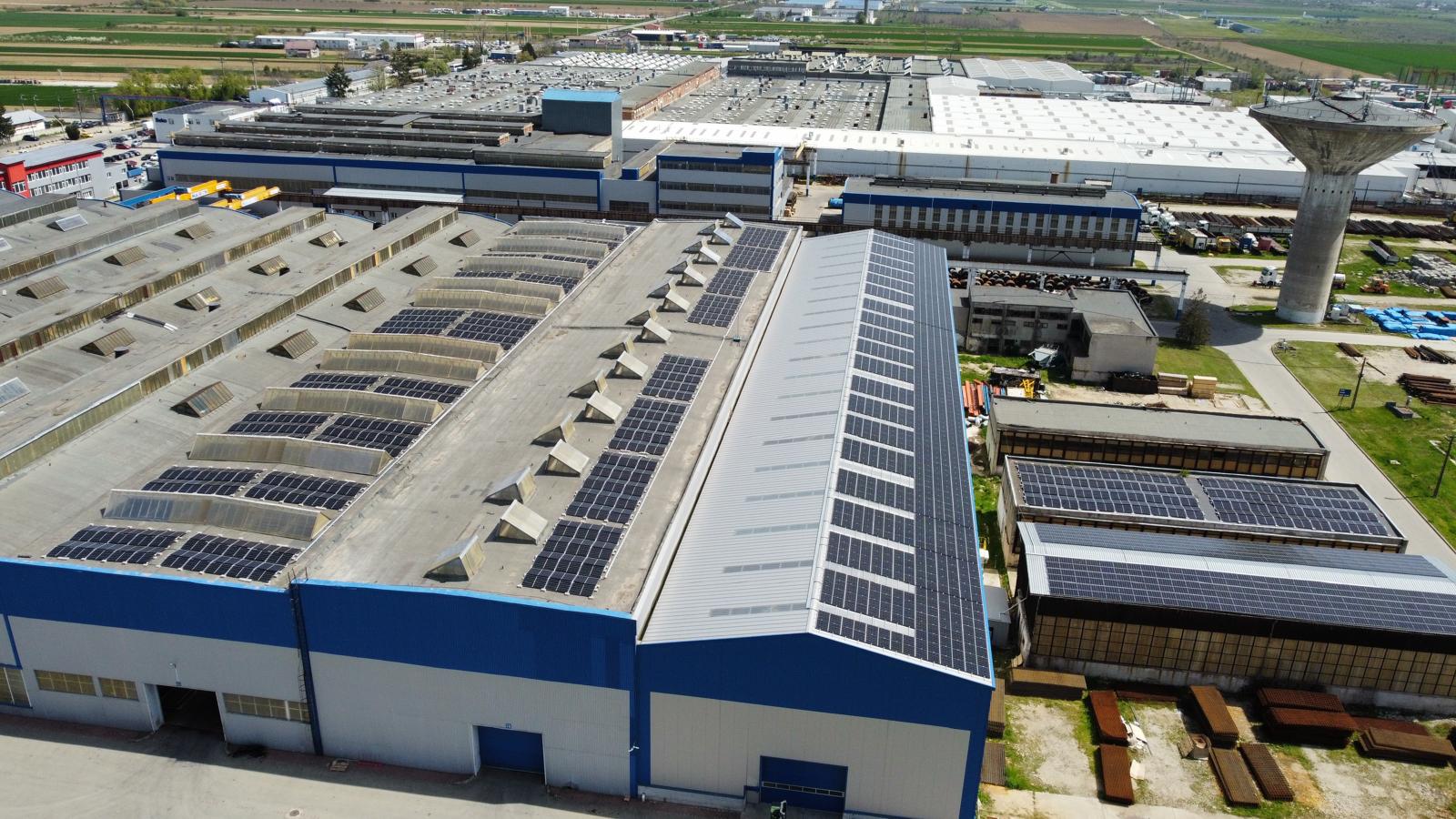
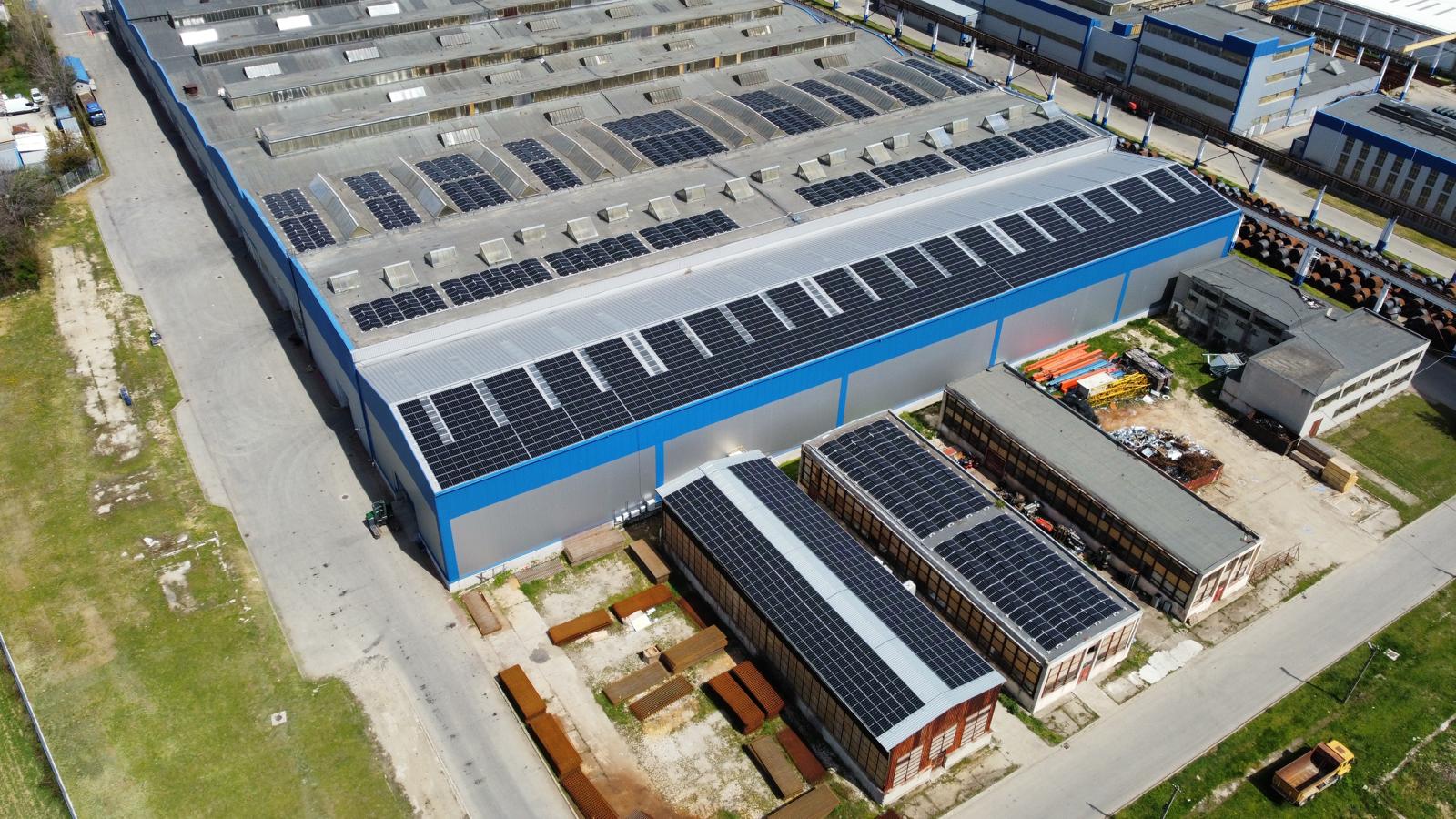
The project involved the design of the photovoltaic system’s capacity, as well as the procurement, transportation, construction, installation, testing, and commissioning phases. A total of 2,088 Longi 435W monocrystalline photovoltaic panels were installed, along with six Huawei 100kW inverters and four Huawei 50kW inverters, as well as mounting structures supplied by Aerocompact and Mounting Systems.
The warranty period for the electrical output of the panels is 25 years, provided that annual maintenance services are performed. Accordingly, the initiative was complemented by a comprehensive range of monitoring, preventive, and corrective maintenance services to ensure the system operates at its designed performance parameters. This technical support enables continuous supervision of system performance, monitoring of generated energy, remote assessment of the efficiency of solar panels and electronic components, and the execution of essential maintenance activities.
The speed of execution and the success of the project were supported by the presence of a single point of contact — the factory director in Găești — who ensured communication and validation of project-stage decisions with MAIRON’s management throughout the entire implementation process. He coordinated with approximately 20 specialists in project management, design, construction, and installation, provided by 4ENVIGO.
Results
Increasing energy independence
The 908.28 kWp photovoltaic system will generate 1GWh of green energy annually, marking an important step towards achieving energy efficiency goals.
Fast return on investment
With an estimated saving of 200,000 Eur annually, the system will have a payback period of only 2.6 years, demonstrating once again that investing in a photovoltaic system is both sustainable and profitable.
Reducing the carbon footprint
The photovoltaic system will reduce CO₂ emissions by approximately 400 tons each year, supporting MAIRON’s decarbonization goals.
Testimonial
“The transition to renewable energy represents a strategic step in the sustainable optimization of our operations, where energy consumption is constant and intense. The collaboration with 4ENVIGO has shown us that such a transition is possible without affecting production activity. The proposed solution perfectly meets the technical requirements and supports our objective of becoming a responsible actor in the metallurgical industry.”
Laurențiu Toma, Head of Investment Mairon Găești
Solution
Following discussions with several suppliers in the market, MAIRON chose 4ENVIGO as its partner. The decision was influenced by 4ENVIGO’s extensive experience in implementing industrial photovoltaic systems, the professionalism demonstrated through their responses to technical requirements, the customized solution developed to distribute the energy produced by the photovoltaic system to all consumers within the factory premises, as well as the innovative solution designed to balance the reactive electrical energy generated by technological processes.
Presented during the technical visit in November 2024, the solution proposed by 4ENVIGO underwent a validation of economic benefits and impact, the project receiving the green light from MAIRON management. Thus, the project execution was completed in just three months, between February 17 and April 17, 2025.
Launched in production at the end of April 2025, the project consisted of installing a photovoltaic plant with a capacity of 908.28 kWp on 7 production halls. The proposed system has an estimated lifespan of 25 years, with a performance of 83%. Perfectly integrated with the existing infrastructure of the Găeşti factory, the technical solution proposed by 4ENVIGO demonstrates that energy efficiency in the metallurgical industry can be achieved while respecting the highest sustainability standards.
Conclusion
The MAIRON initiative highlights the ability of a leader in the Romanian metallurgical industry to support the implementation of sustainable solutions and adopt efficient production strategies to respond to European regulations to combat climate change.
The MAIRON project demonstrates how a major player in the local metallurgical industry is responding to both economic and environmental pressures by adopting green technologies. The MAIRON initiative is in line with the European metallurgical industry’s increasing focus on minimizing carbon emissions and aligning with sustainability objectives across the entire supply chain. Through such efforts, the Romanian metallurgical industry is joining the gradual transition towards a sustainable European future, balancing operational activities with the increasingly pressing need to preserve the environment.

